
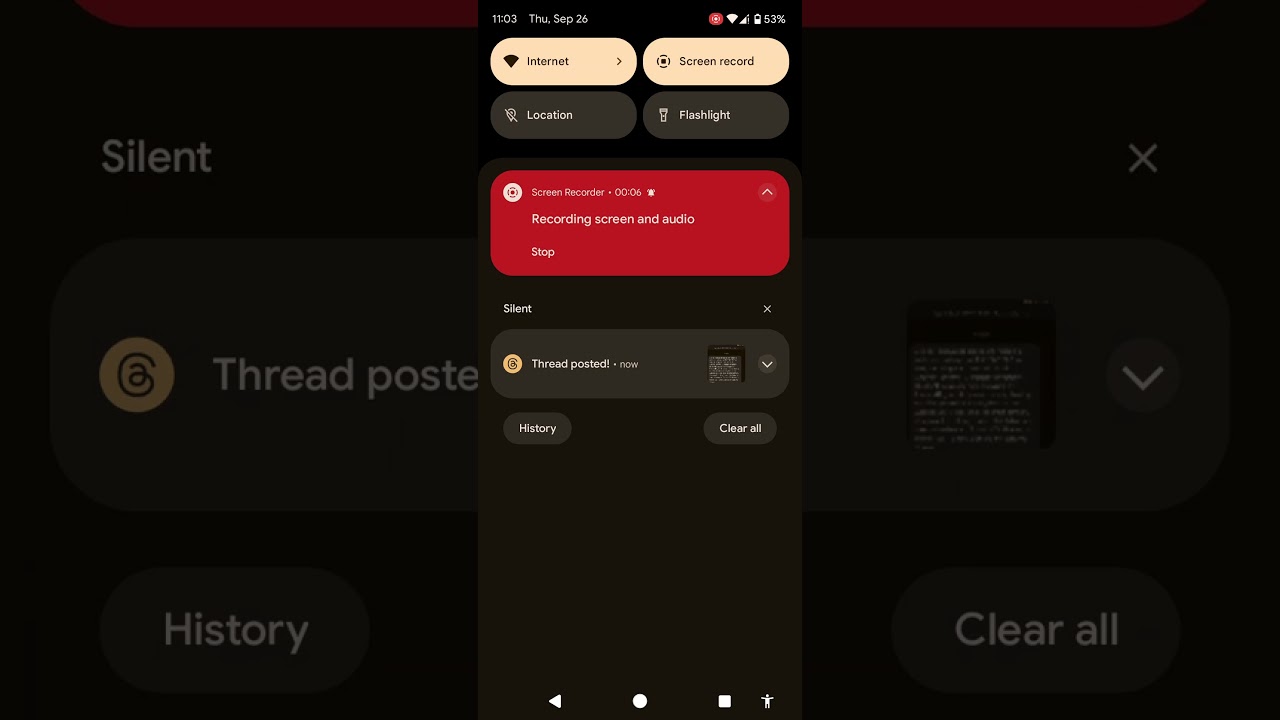
In this article, we will explore the intriguing question of whether threads notify screen record and delve into the various aspects surrounding this topic. Threads are a fundamental concept in computer science, allowing for parallel execution of tasks. On the other hand, screen recording has become increasingly popular as a means of capturing and sharing what is happening on our screens. But do threads have the ability to notify screen record? Let’s find out!
Understanding Threads and Screen Recording
Before we proceed, it is essential to have a solid understanding of what threads and screen recording entail. Threads, in computer science, refer to individual sequences of instructions that can be executed independently. They provide a way to divide a program into multiple tasks that can be processed concurrently. This parallel processing allows for improved performance and efficiency.
Screen recording, on the other hand, involves capturing the visual content displayed on a computer screen, including any audio accompanying it. It is commonly used for creating tutorials, recording gameplay, or documenting software bugs. Screen recording software records the actions happening on the screen, enabling users to share or review them later.
The Relationship Between Threads and Screen Recording
Now that we have a basic understanding of threads and screen recording, let’s explore whether threads have the capability to notify screen record. In simple terms, the answer is no. Threads, by themselves, do not possess the inherent ability to notify or interact directly with screen recording software.
Threads are primarily focused on executing tasks concurrently, without any knowledge of the external environment in which they operate. They are not designed to interact with screen recording software or any other specific applications directly. Instead, their purpose is to divide a program into manageable units of work, allowing for parallel processing.
The Role of APIs and Communication
Although threads themselves do not notify screen record, there are ways to achieve this functionality through the use of Application Programming Interfaces (APIs) and inter-thread communication. APIs provide a set of tools and protocols that allow different software applications to communicate with each other.
Screen recording software may offer APIs that developers can utilize to notify the software when specific events occur. For example, an application running on a separate thread can communicate with the screen recording software via the provided API to trigger recording at a particular moment.
However, it is important to note that the availability and implementation of such APIs vary depending on the screen recording software being used. Developers need to consult the documentation or resources provided by the screen recording software to determine if this functionality is supported.
Common Scenarios for Notifying Screen Record
While threads themselves do not inherently notify screen record, there are several scenarios where threads can indirectly facilitate this functionality. Let’s explore some of the common scenarios:
1. User Interaction
Threads can be utilized to monitor user interaction with an application and trigger screen recording accordingly. For instance, when a user clicks a specific button or performs a particular action, a thread can be responsible for notifying the screen recording software to start recording.
2. Event-Based Triggers
Threads can also be used to monitor specific events occurring within an application. When a particular event is detected, such as the completion of a task or the occurrence of an error, a thread can notify the screen recording software to capture the screen and record the event for analysis or documentation purposes.
3. Time-Based Triggers
Threads can be set up to trigger screen recording at predetermined intervals. For example, a thread can be scheduled to notify the screen recording software to start recording every hour or at a specific time of day. This can be useful for capturing periodic updates or monitoring system behavior over time.
FAQs
Q: Can threads directly control screen recording software?
A: No, threads themselves cannot directly control screen recording software. However, they can indirectly facilitate screen recording by utilizing APIs and inter-thread communication.
Q: How can developers implement screen recording functionality using threads?
A: Developers can implement screen recording functionality by utilizing APIs provided by screen recording software. They can create threads to monitor specific events, user interactions, or time-based triggers and notify the screen recording software via the provided API.
Q: Are there any limitations to using threads for screen recording?
A: The limitations primarily depend on the capabilities of the screen recording software and the APIs it provides. Developers should consult the documentation or resources provided by the screen recording software to understand any limitations or restrictions that may apply.
Conclusion
In conclusion, threads do not inherently notify screen record. However, through the use of APIs and inter-thread communication, developers can implement functionality that indirectly notifies screen recording software. Threads can be utilized to monitor user interactions, detect specific events, or even trigger screen recording at predetermined intervals. It is important for developers to understand the capabilities and limitations of the screen recording software they are working with to effectively implement screen recording functionality using threads. So, while threads may not directly notify screen record, they can certainly play a vital role in facilitating this process.